NEO Dr. INC.
CONTACT USKRENJP

NEODOCTOR SCIENTIFIC FOUNDATION

FORCE
BECOMES
INFORMATION.

Cells perceive both the magnitude of force
and the mechanical environment it creates.

01

MECHANOBIOLOGY

BIOLOGY FOLLOWS FORCE

Mechanical stimuli can act as
physical information that cells can interpret.

NeoDoctor studies how mechanical energy stored in a structure interacts with tissue and may proceed through cellular mechanosensing toward biological responses.

01MECHANICAL LOADING
02MECHANOSENSING
03GENE REGULATION
04CELLULAR RESPONSE
05STRUCTURAL REMODELING
01

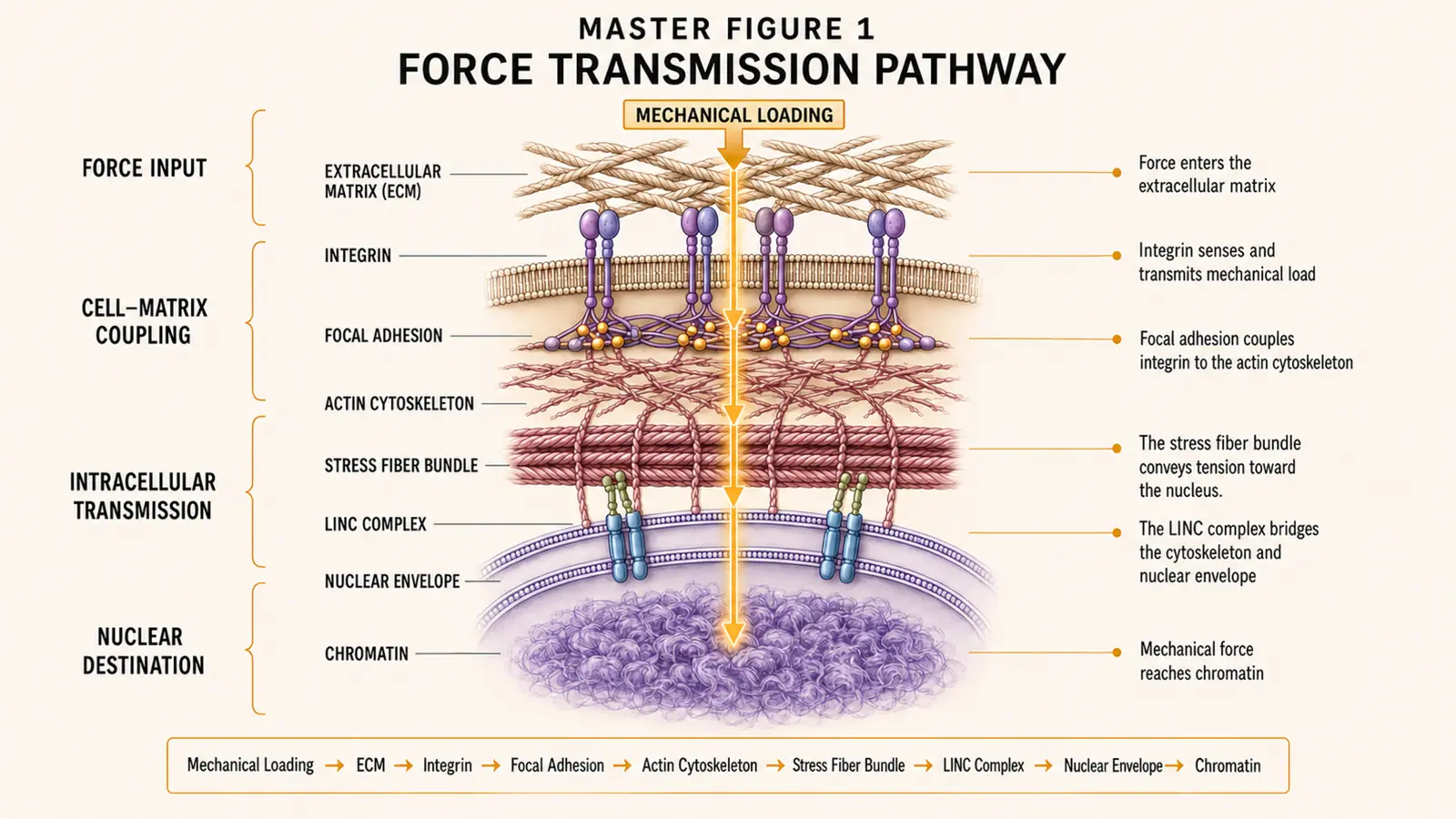
FORCE TRANSMISSION PATHWAY

Force is transmitted from the extracellular matrix to the nucleus
through a continuous pathway.

Mechanical loading applied to tissue can reach the nuclear envelope and chromatin through the ECM, integrins, focal adhesions and the cytoskeleton.

Mechanical force-transmission pathway from the ECM to the nucleus
SCIENTIFIC FIGURE · EDUCATIONAL SYNTHESIS
02

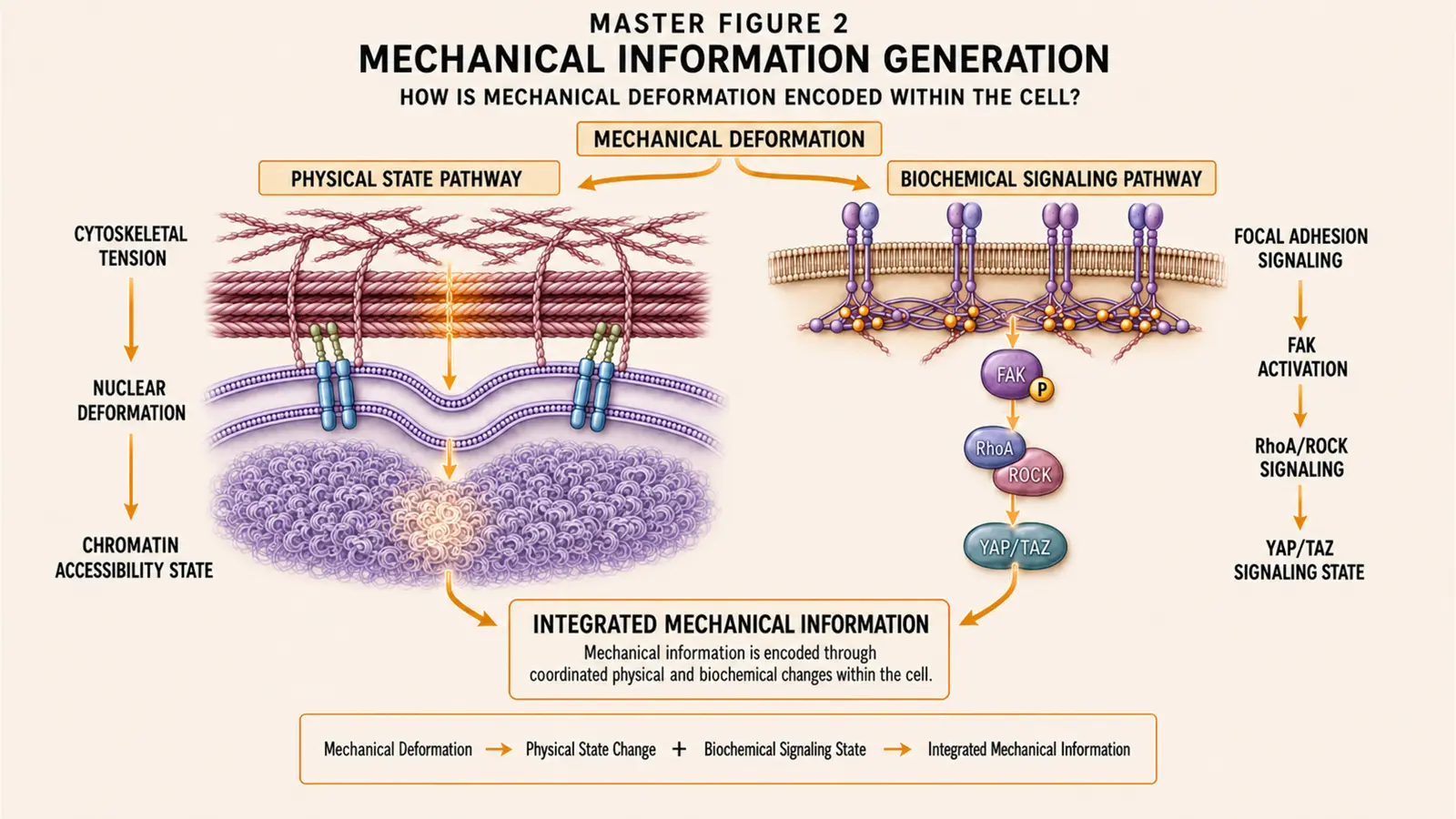
MECHANICAL INFORMATION GENERATION

Cells interpret deformation as both
a physical state and a biochemical signal.

Physical pathways such as nuclear deformation and altered chromatin accessibility, together with biochemical pathways involving FAK, RhoA/ROCK and YAP/TAZ, contribute to mechanical information.

Mechanical-information generation within the cell
SCIENTIFIC FIGURE · EDUCATIONAL SYNTHESIS
03

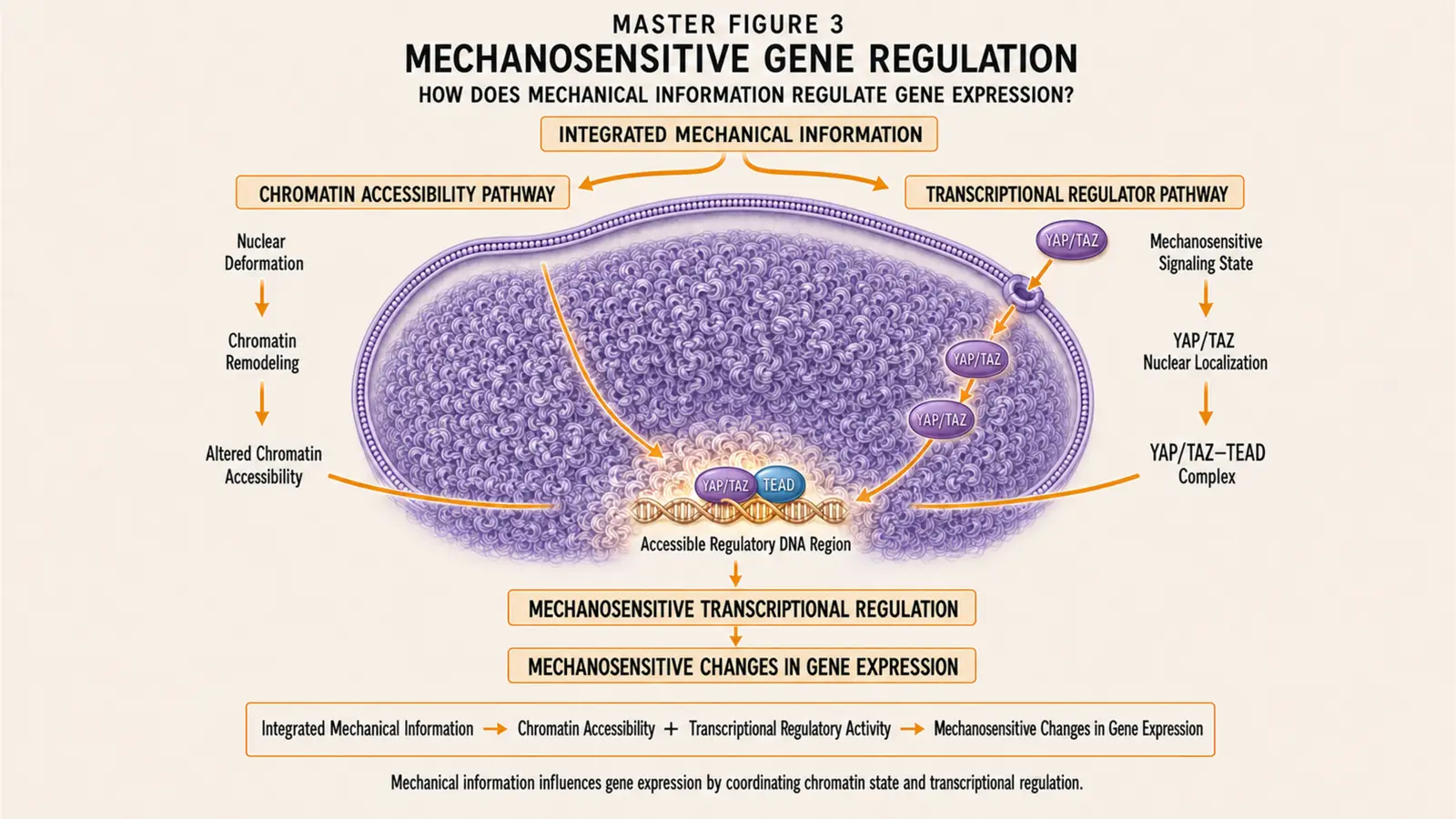
MECHANOSENSITIVE GENE REGULATION

Integrated mechanical information can influence
the conditions that regulate gene expression.

Chromatin state and the activity of transcriptional regulators can be influenced by the mechanical environment. This relationship provides a scientific basis for understanding cell function and matrix remodeling.

Mechanosensitive gene-regulation pathway
SCIENTIFIC FIGURE · EDUCATIONAL SYNTHESIS

SCIENTIFIC BOUNDARY

Mechanical input can be designed,
but biological responses must be established through evidence.

JAMBER AI is a medical device designed to generate mechanical input. The pathways shown describe the scientific basis of mechanobiology and NeoDoctor's research framework; they do not guarantee a specific clinical outcome.

VIEW RESEARCH & EVIDENCE