
Amount of torsion applied to the filament
KR
NEODOCTOR TECHNOLOGY PLATFORM
ENERGY
BECOMES
DESIGN.
Stored torsional energy becomes
a tunable mechanical response.
01
CORE PRINCIPLE
ENERGY STORED · INFORMATION DELIVERED
We engineer material properties
and structural mechanical response together.
A coil storing torsional energy recovers in its designed direction after release.
Coiling in the same or opposite direction as torsion
Filament diameter, inner diameter, pitch and segmentation
Effective stiffness and recovery direction
Movement and tissue environment by anatomical region
STRETCH → RELEASE → CONTRACT
The torsion and coiling directions are combined to engineer contraction after extension and release.
COMPRESS → RELEASE → EXPAND
Opposing winding directions are used to engineer expansion after compression and release.
MULTIPLE RESPONSES IN ONE STRUCTURE
We study expandable architectures that combine distinct elastic segments and recovery directions.
02
MECHANICAL CHARACTERIZATION
SAME MATERIAL · TUNABLE MECHANICAL RESPONSE
Torsional input changes
the elastic response of the structure.
These are actual test data from coil springs made with the same PDO USP 3-0 filament. Data, curves and labels are reproduced from the original test material.
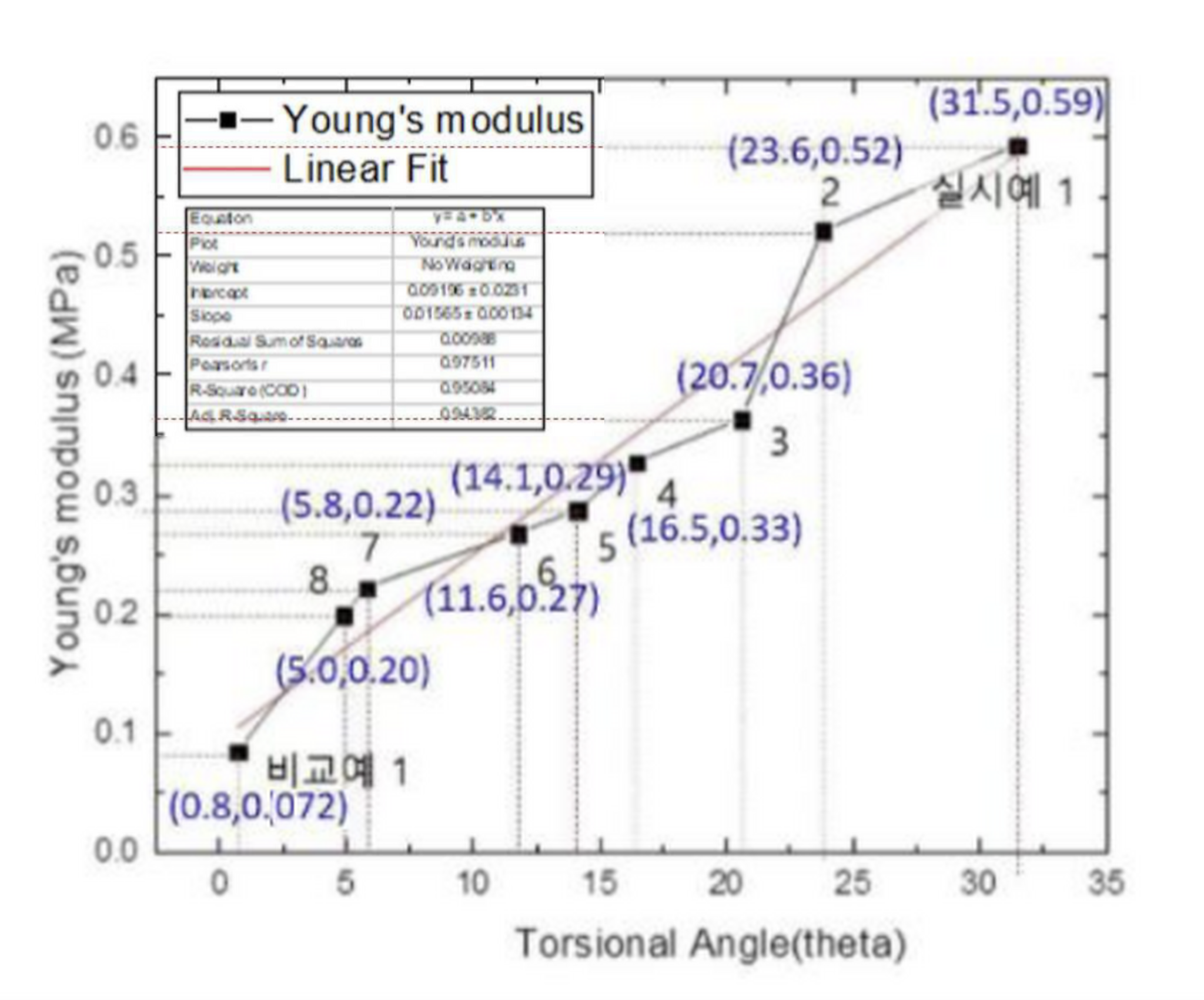
Measured elastic modulus tends to increase with torsional angle
The Young's modulus values were calculated from finished coil-spring specimens and should be distinguished from the intrinsic properties of the PDO raw material.
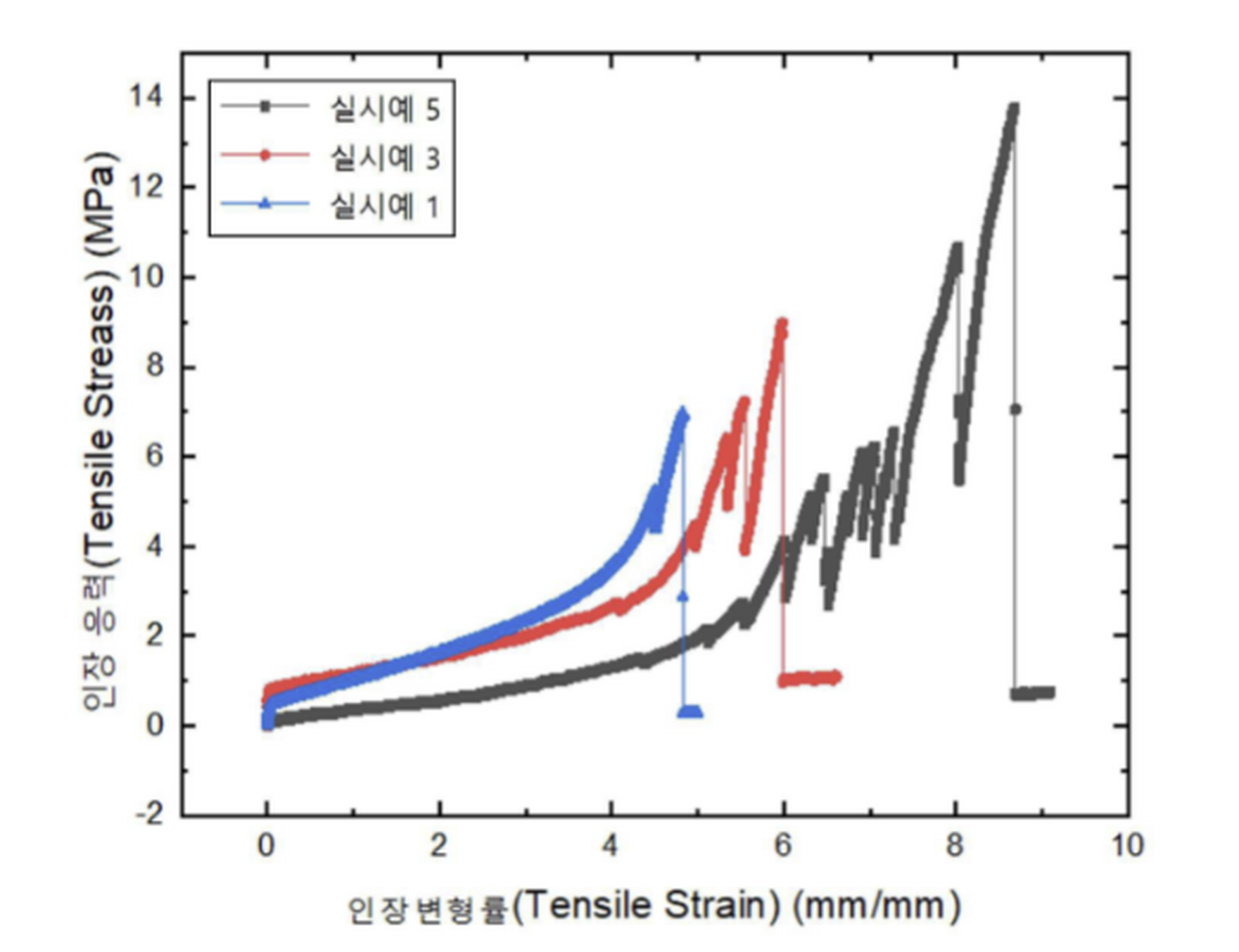
Tensile stress–strain behavior varies with torsional conditions
The actual curves for Examples 1, 3 and 5 show that tensile behavior and the range of mechanical response can vary with structural design.
MEASURED PRINCIPLE
Elastic response can be tuned through torsional input and structural design without changing the material.
These results describe the mechanical characteristics of the tested specimens under the stated conditions and do not represent clinical performance.PATENTED TECHNOLOGY
Korean Patent
No. 10-2841681
TUNABLE ELASTICITY
The patent protects technology for tuning elastic characteristics through torsional angle, filament diameter, inner diameter, pitch and their combinations.
VIEW IP PORTFOLIO →EVIDENCE BOUNDARY
Measured mechanical responses are distinguished from
biological and clinical outcomes.
Mechanical testing characterizes the physical properties of the structure. Tissue responses and clinical significance require separate nonclinical and clinical evidence.
VIEW EVIDENCE →